 FABLAB AI
Crop diagnostics at the edge of the field.No connectivity required.
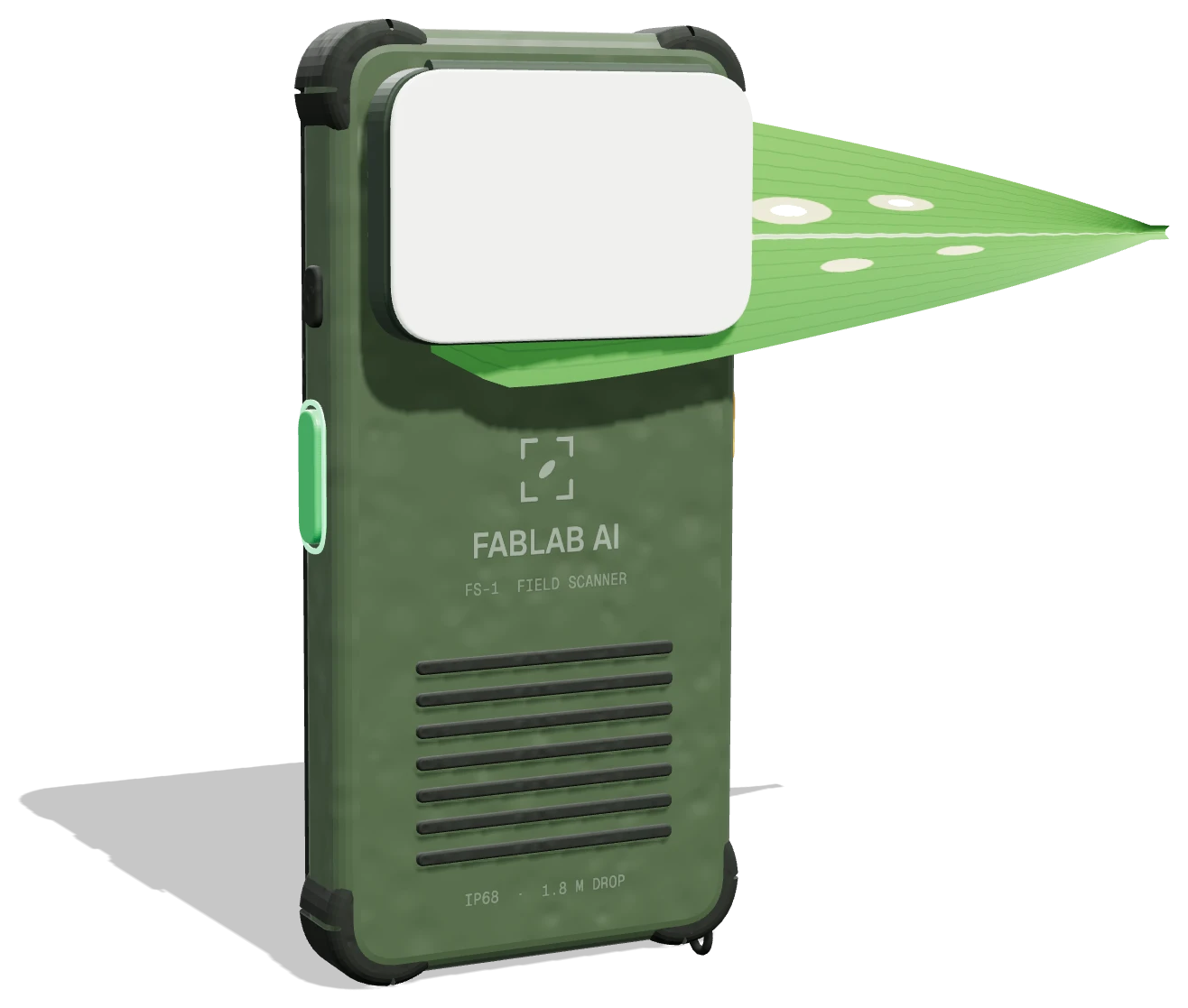
FABLAB AI puts a rugged crop scanner in every farmer’s hand and connects them to a community where they sell their harvest, buy inputs, hire services and learn from each other. Every diagnosis runs on the device, with guidance spoken in the farmer’s own language.
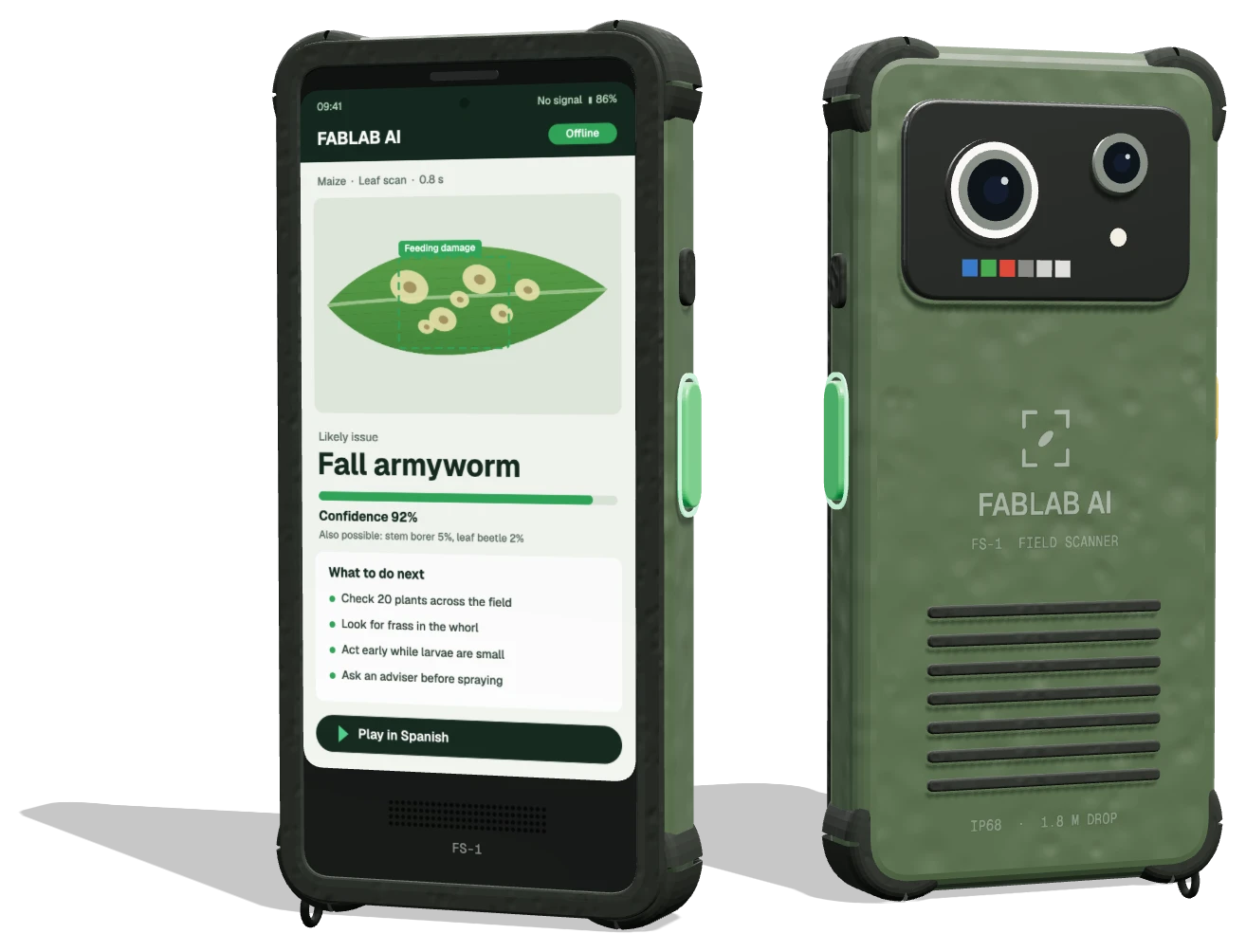
- 1Sunlight-readable display6.5 in, 1200 nits
- 2One-button scanWorks through gloves and mud
- 3Loud front speakerGuidance the whole family hears
 123456
- 4Ring-lit macro camera50 MP with its own light
- 5Colour reference stripTrue colour in any light
- 6Rugged shellIP68, 1.8 m drops
- NVIDIA TAOtransfer learning
- NVIDIA Tritonexpert-review serving
- NVIDIA CUDAGPU training
- On-device NPUno cloud needed
- 12
- crops in the launch catalogue
- 14
- languages of spoken guidance
- 2 days
- of scanning on one charge
- 0
- bars of signal needed to diagnose
Figures are target specifications for the FS-1 prototype.

One platform, two halves
The scanner tells a farmer what is wrong and what to do. The community helps them act on it, sell what they grow and learn from everyone else.
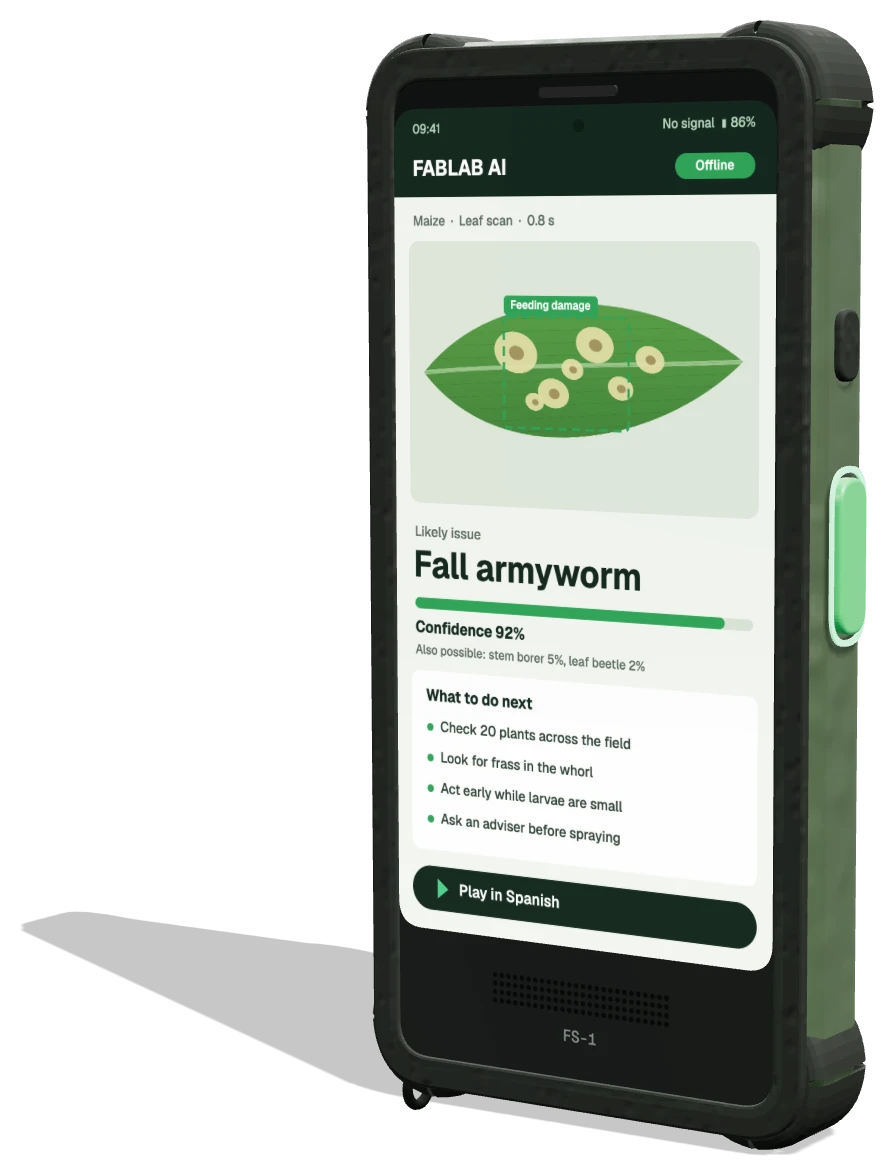
The FS-1 scanner
A ring-lit macro camera, offline AI and spoken guidance in a rugged handheld.
Explore the scanner- Jasmine rice paddy, 5 tScan-verified · 94% healthy₫7.8k/kg
- Combine harvesterBooked 64 times · 4.8 ★₫1.8m/ha
- Arabica coffee cherriesScan-verified · no leaf rustRp 14k/kg
- Planthopper: spray or wait?Agronomist answered · 7Advice
The community
Sell your harvest, buy inputs, hire services and ask for advice, on the scanner or a phone app.
See the communityBuilt for the people who walk the rows
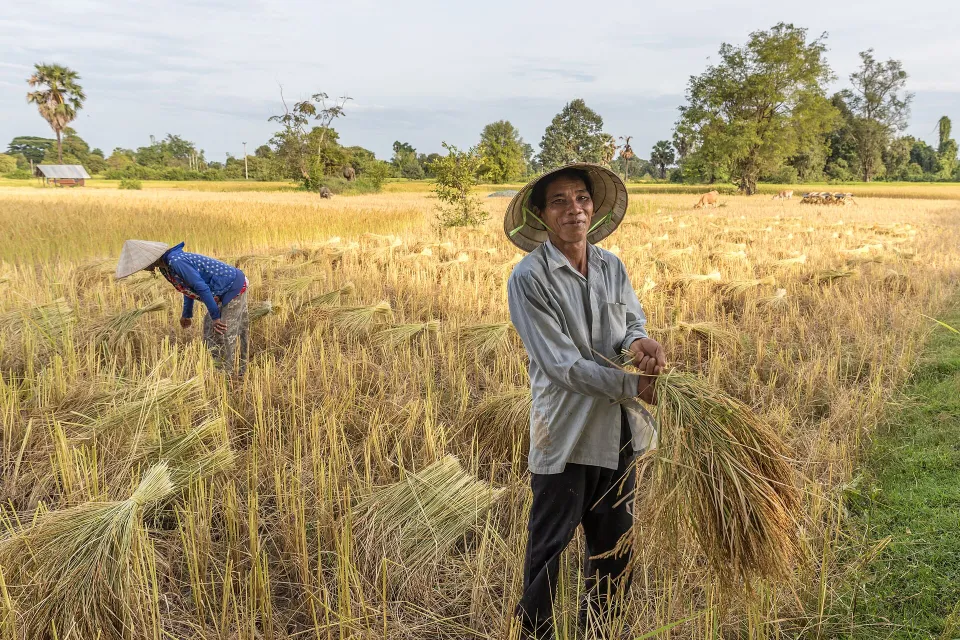
Farmers notice the problem first, so the scanner belongs in their hands. Extension workers and cooperatives see the synced picture and step in where they are needed.
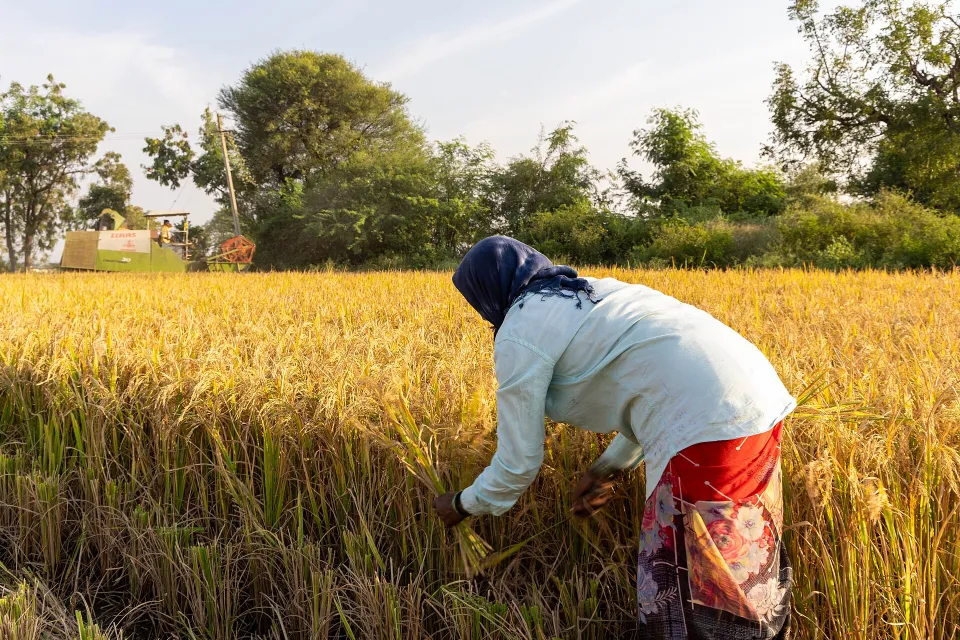
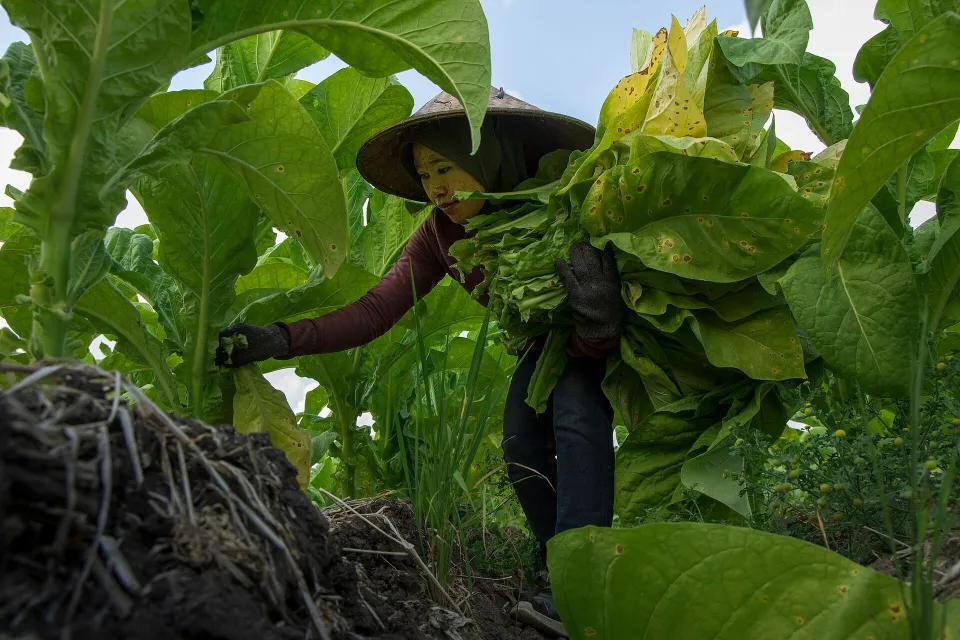

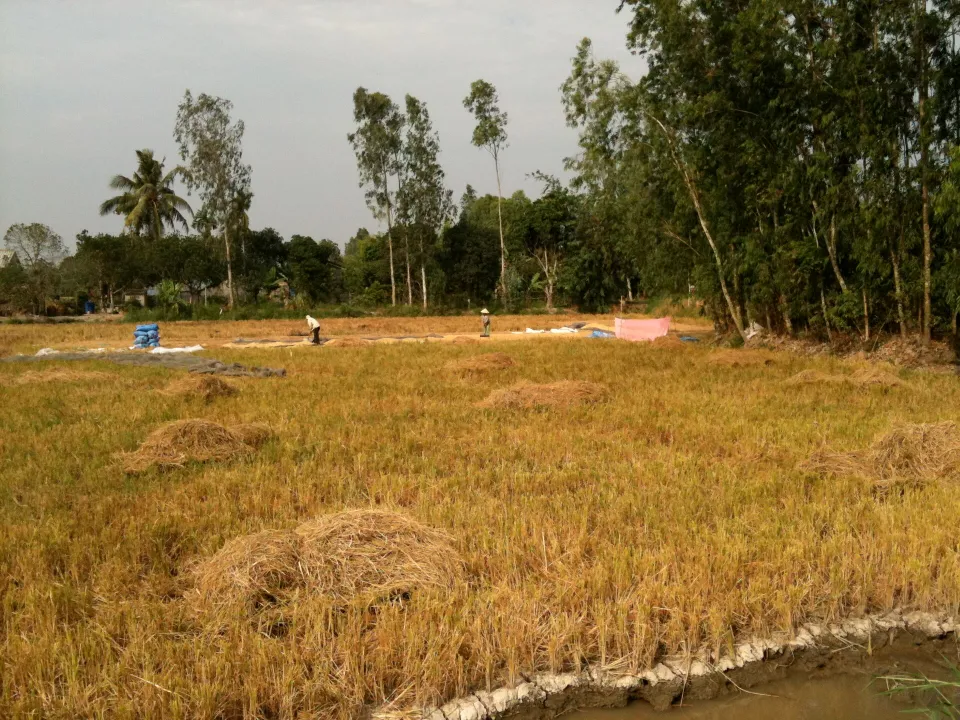
Photos: Nanditha Gogate (WELL Labs), Arnawakomang and Arief1802 via Wikimedia Commons. Credits
Made for local farmers, from the Mekong to the Andes
There are about 570 million farms in the world, and most of them are smaller than two hectares. They share the same problem: a sick crop, no agronomist nearby and no signal. The FS-1 is built to answer locally, in the local language.
- 01
Southeast Asia
- Crops
- Rice · Coffee · Cocoa · Cassava · Banana
- Voices
- Vietnamese, Indonesian, Thai, Tagalog
Rice blast · 79% · spoken in Vietnamese · offline
- 02
South Asia
- Crops
- Rice · Wheat · Potato · Tomato
- Voices
- Hindi, Bengali, English
Late blight · 90% · spoken in Hindi · offline
- 03
Latin America
- Crops
- Maize · Coffee · Soybean · Potato
- Voices
- Spanish, Portuguese
Coffee leaf rust · 84% · spoken in Portuguese · offline
- 04
Sub-Saharan Africa
- Crops
- Maize · Cassava · Cowpea · Cocoa
- Voices
- Swahili, Zulu, Amharic, French, English
Cassava mosaic disease · 88% · spoken in Swahili · offline
- 05
Middle East and North Africa
- Crops
- Wheat · Tomato · Potato
- Voices
- Arabic, French
Stripe rust · 86% · spoken in Arabic · offline
- +
Your region next
New crop catalogues and voice packs install as downloads, so the same scanner can serve a new country without new hardware.
Propose a pilot
Regional crop and language sets are launch targets. Each catalogue ships only after it passes accuracy tests on field images from that region. Farm count: FAO.
A crop clinic that fits in a pocket
Everything a scan needs in one rugged handheld: a ring-lit macro camera, a colour reference, a bright screen, a loud speaker, an on-device AI processor and two days of battery.
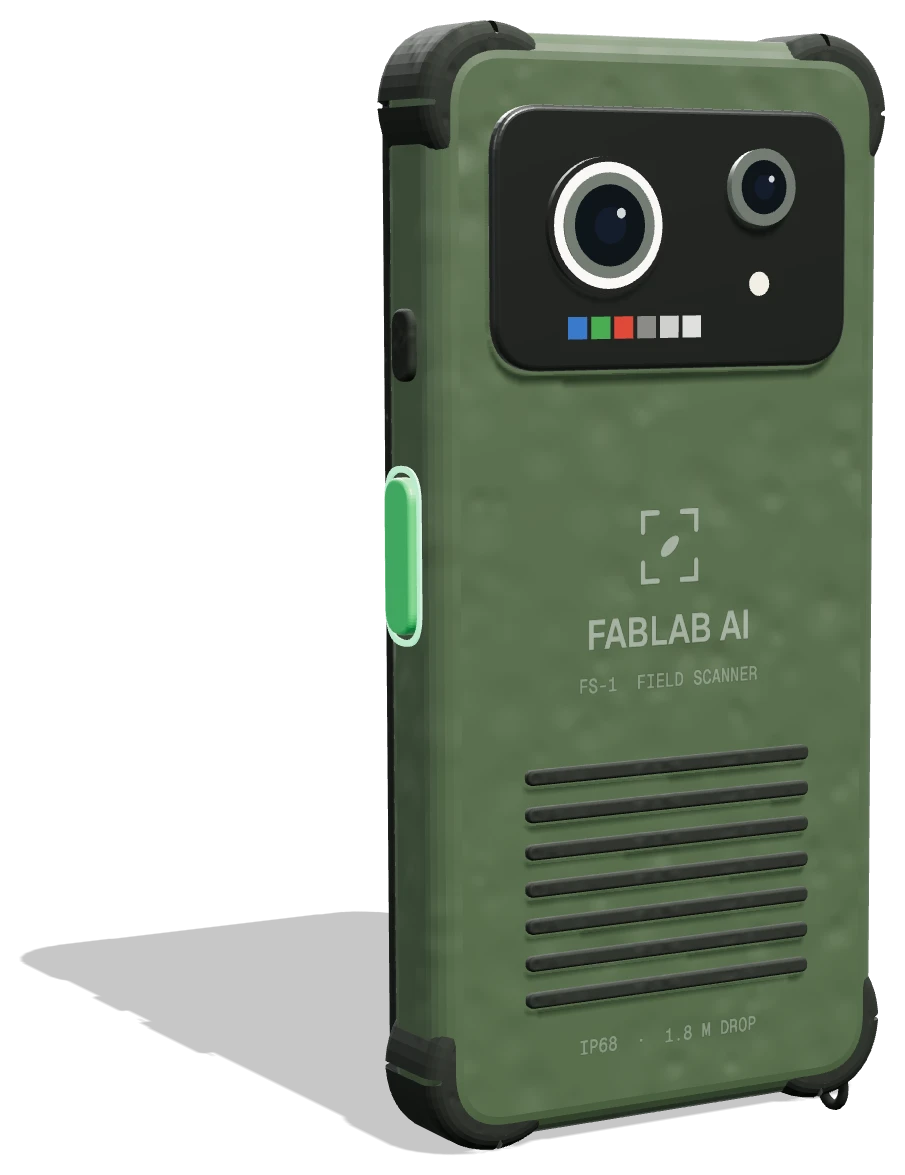
A 50 MP macro camera inside its own ring light, so a leaf is photographed the same way at noon, at dusk or under cloud.
A second camera for whole plants, stems, pods and fruit that are too big for a close-up.
Six printed colour patches the model reads in every clip scan, so it can correct for light before it reads symptoms.
A large, lit button on the side that works through gloves and mud. Speak sits on the other side.
Raised rubber ribs on the back keep the scanner steady in a wet or dusty hand.
Sealed to IP68 and built to survive 1.8 m drops onto hard ground.
Try a scan
Pick a leaf, set the light and focus, then press Scan. Push a slider too far and the scanner refuses the photo instead of guessing.
- Image checkSharpness and light
- Crop and damageFind the plant and the problem area
- Rank problemsCompare against the crop catalogue
- GuidancePick curated next steps
Results are a demonstration with sample data. The real scanner runs its models on the device.
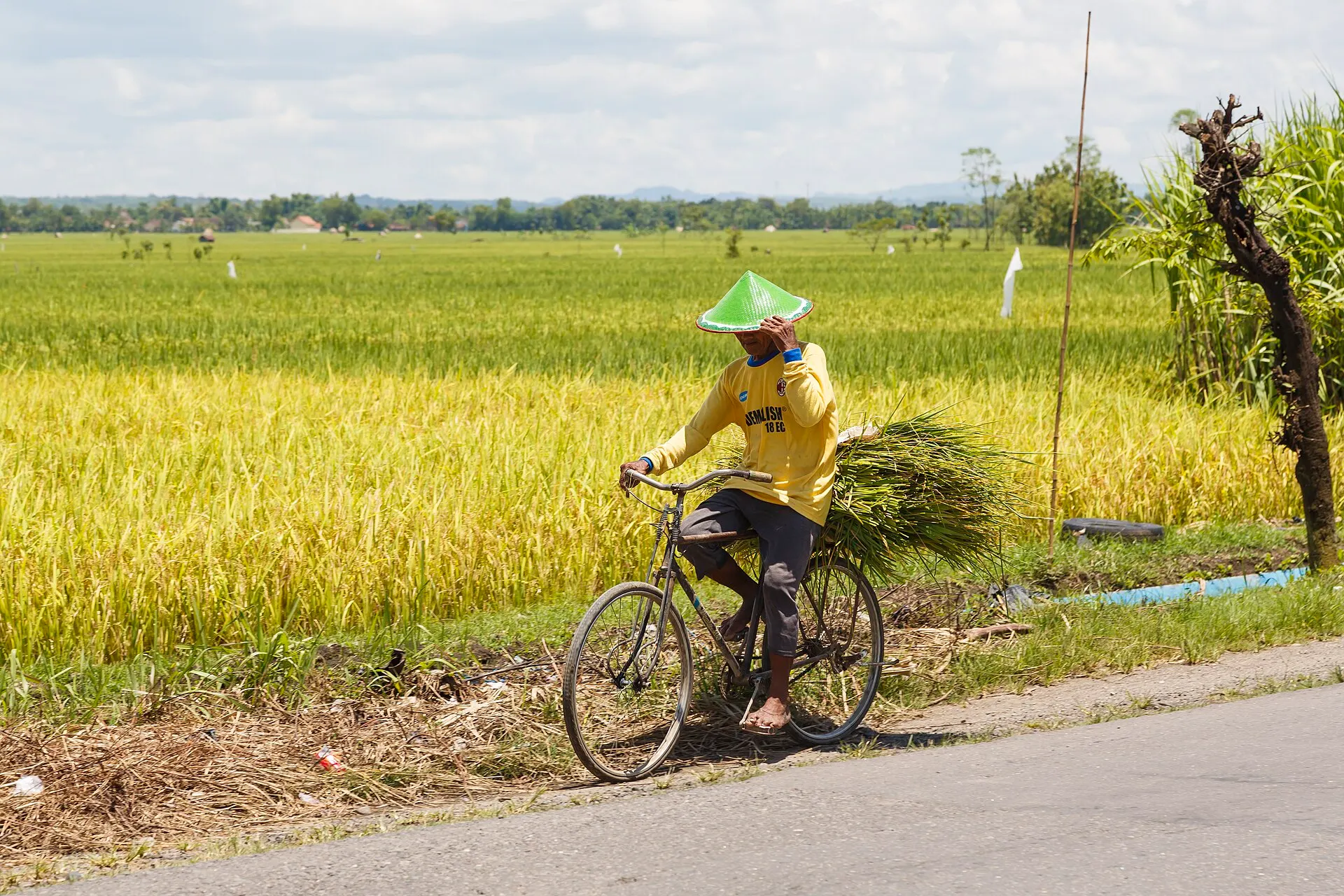 Photo: CEphoto, Uwe Aranas, CC BY-SA 3.0
No network? Keep scanning.
On small farms around the world, crop problems are found far from good coverage. The model, the guidance library and the voices are stored on the scanner, so the farmer gets an answer in the field, not after a trip to town.


One scanner per farmer, one picture for the network
Each farmer scans their own crop. When scanners sync, the people who support those farmers see what is spreading and where.
Every farm reports, without a visit
Synced scans arrive with crop, result and date, so the programme sees outbreaks forming and sends officers to the farms that need them most.

Scanners for every member
The cooperative supplies scanners to members, often paid back from the harvest. On market day they sync over the cooperative’s Wi-Fi and the cooperative sees what is spreading.
Farmers arrive with a diagnosis
The farmer shows the dealer the scan result, so the treatment matches the problem and money is not spent on the wrong input. Dealers can also sell and service scanners.
It reports likelihood, not certainty
Every result comes with a confidence level and the next most likely options. When the scanner is unsure, it says so and asks for a better image or an expert, instead of guessing.
Put a scanner in every farmer’s hand, and a market at their fingertips
The first FS-1 units go out in 2027, timed to each region’s growing season. We are looking for extension programmes, cooperatives and research partners on every continent to run them.