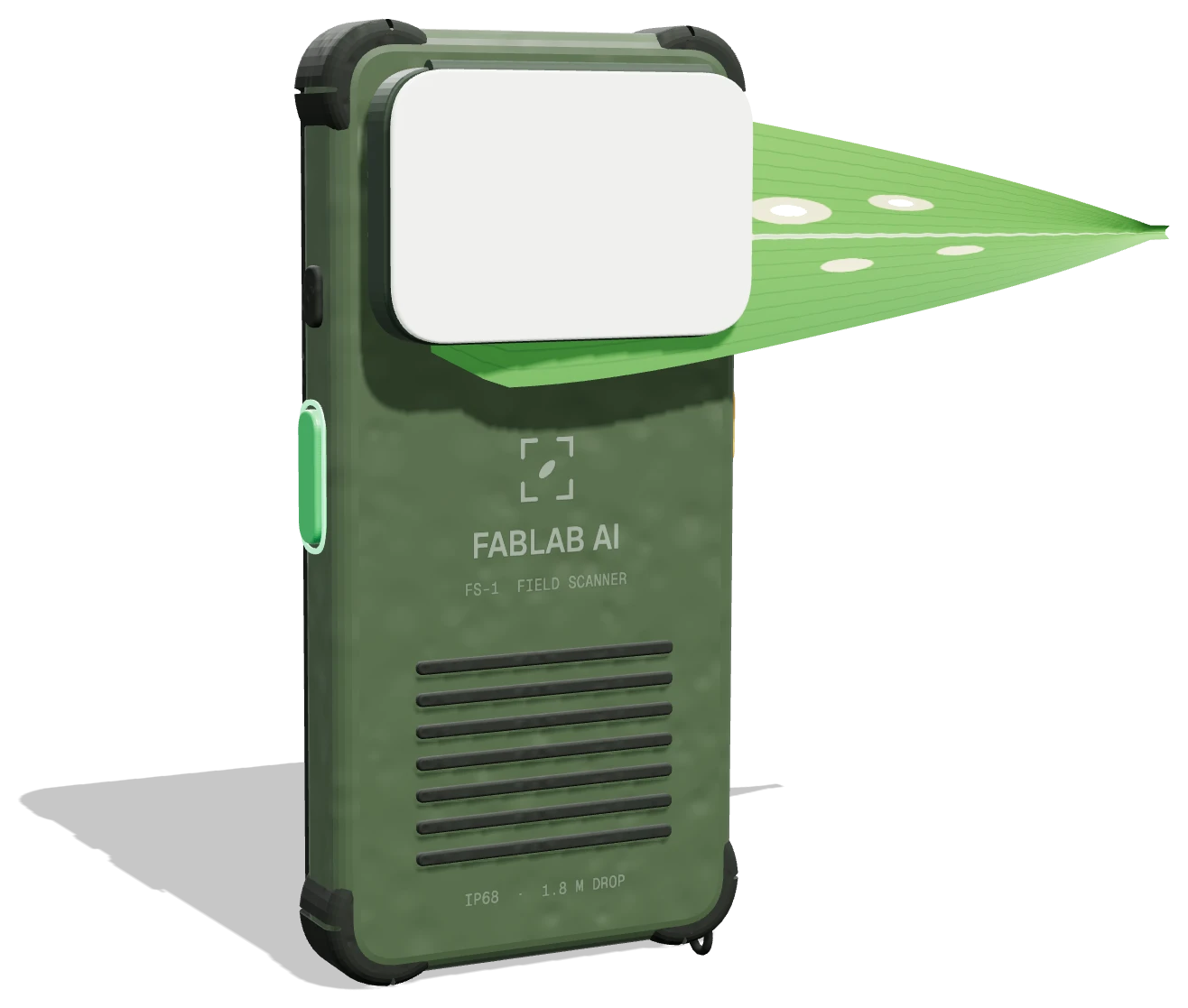
The leaf clip, for the most accurate scan
Slide a leaf into the clip and press Scan. The diffuser, ring light and colour strip give every leaf the same light, so clip scans are the most accurate option.
 FABLAB AI
 FS-1 scannerThe handheld, its cameras, buttons and battery
 Offline AIWhat runs on the scanner and what waits for signal
 Crop coverageTwelve launch crops and what each catalogue coversTechnologyThe vision pipeline, edge models and confidence
 Run a pilot seasonScanners for your farmers and a place for them to trade.

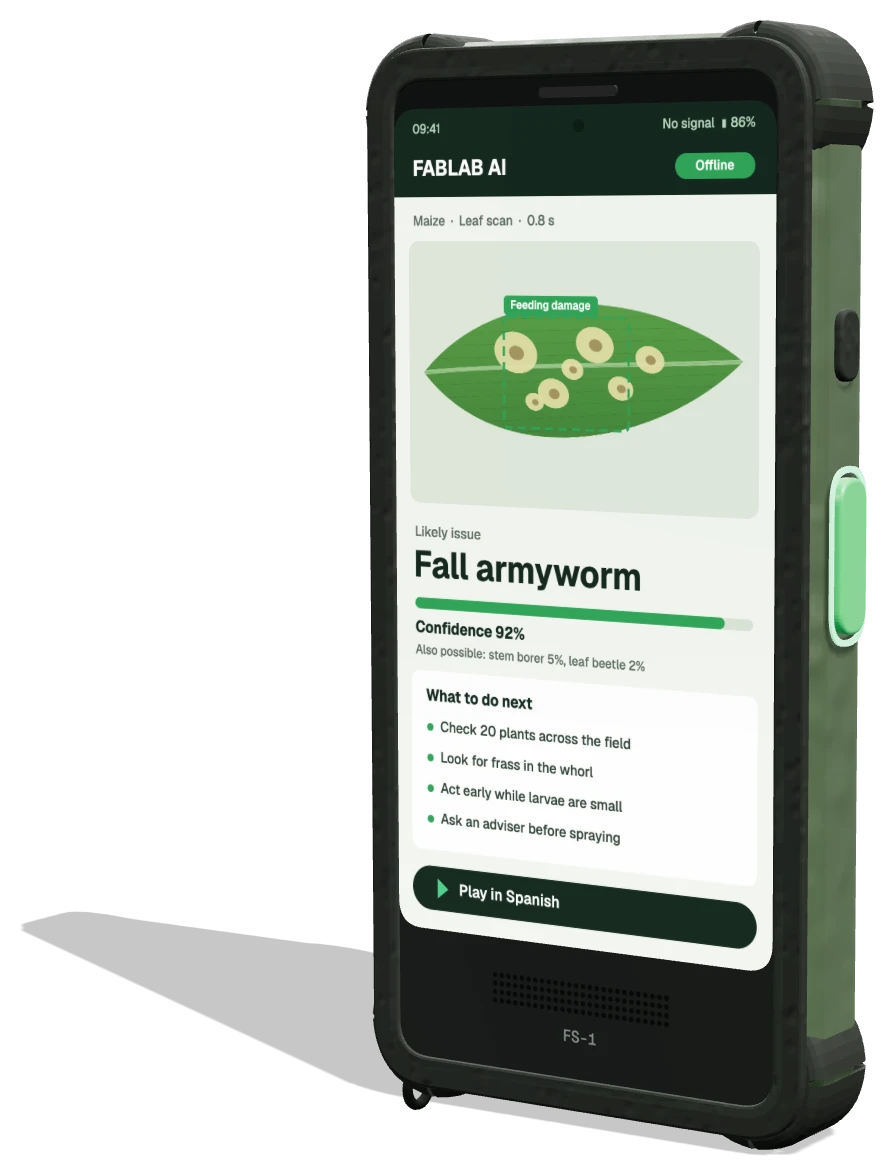
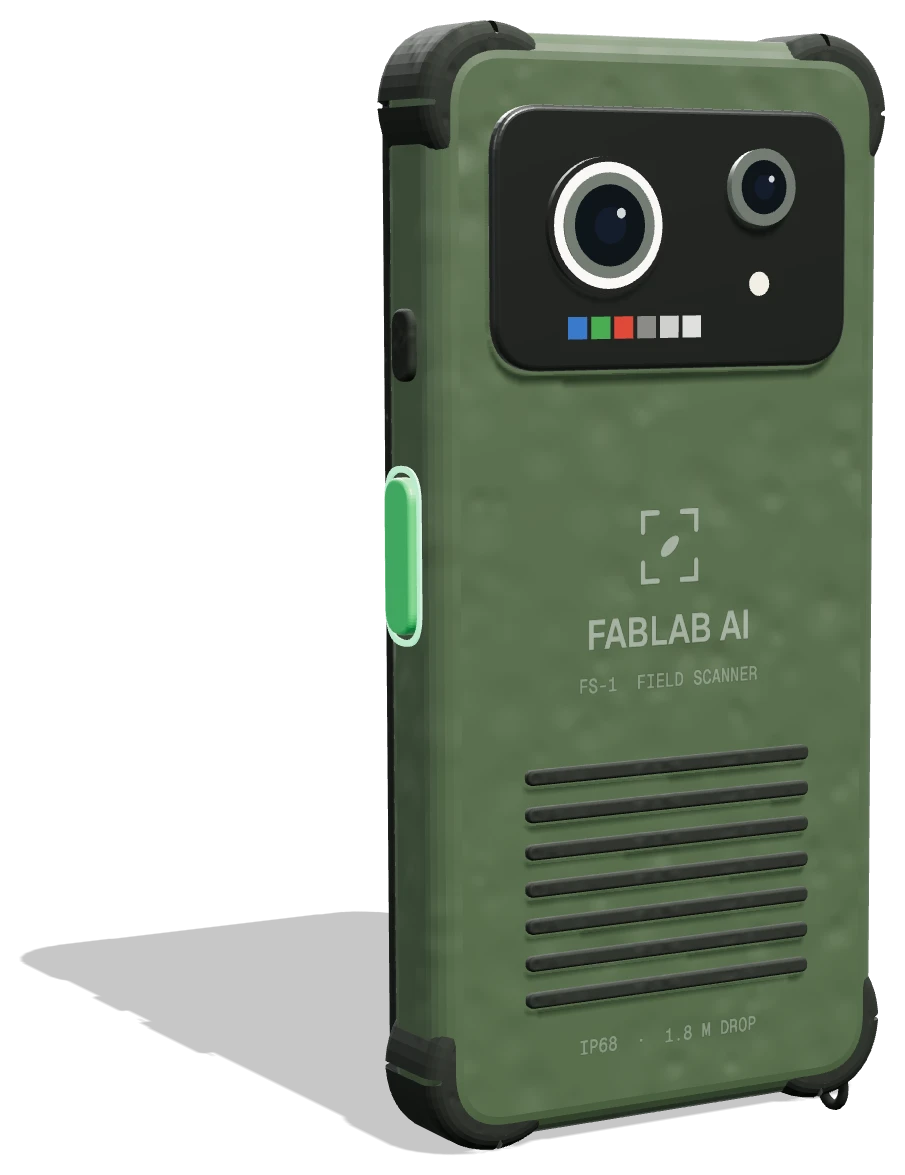
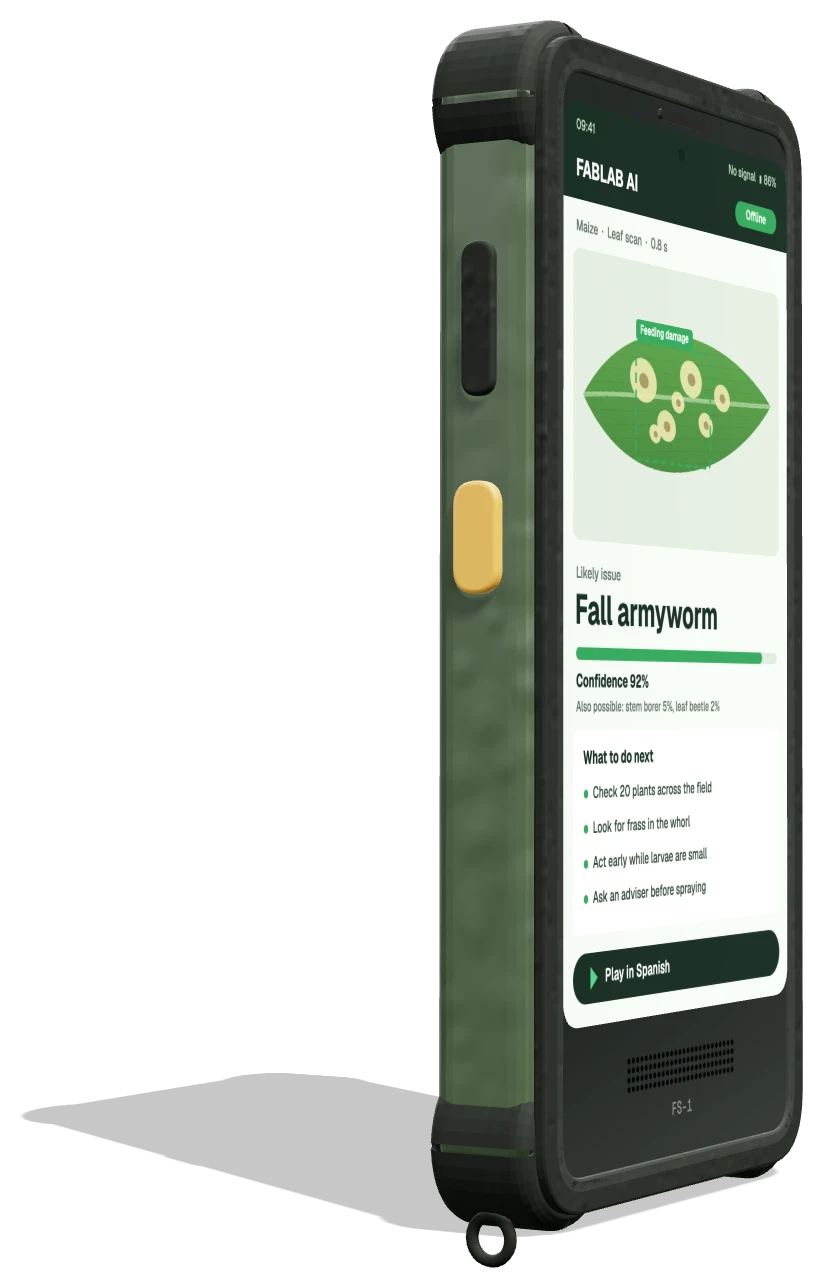
The FS-1 puts a ring-lit macro camera, a sunlight-readable screen, an on-device AI processor and spoken guidance into a rugged handheld that each farmer owns. Press Scan and it answers, with or without signal.
Drag to turn the scanner
Interactive concept model of the FS-1 prototype.

Designed for people standing in a field, often with wet or dirty hands. Tap a number for detail.
Clips over the camera island in one move. The leaf slides in from the side and is held flat at the right distance from the lens.
A white window behind the leaf spreads the ring light evenly, so shadows and glare do not hide symptoms.
The leaf stays attached to the plant. No picking, no fiddly framing, and the same distance on every scan.
A large, lit button on the side that works through gloves and mud.
Sealed to IP68 and built to survive 1.8 m drops onto hard ground.
An ordinary phone photo changes with every angle and every cloud. The FS-1 brings its own light and colour reference, which is what makes its results dependable.
Slide a leaf into the clip and press Scan. The diffuser, ring light and colour strip give every leaf the same light, so clip scans are the most accurate option.
Hold the macro camera a hand’s width from a stem, pod, fruit or whorl. The ring around the scan button lights green when the image is steady enough.
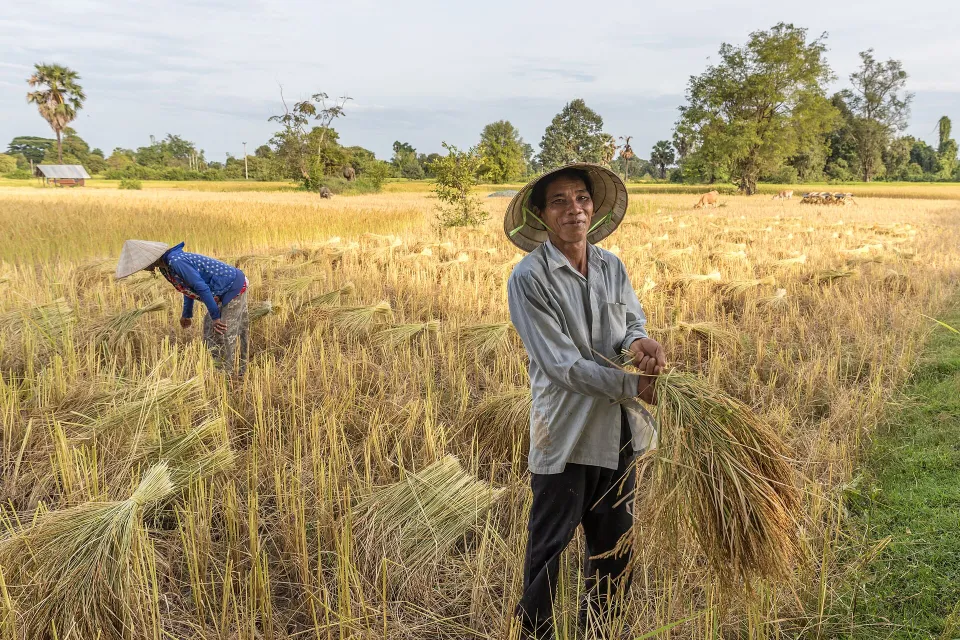
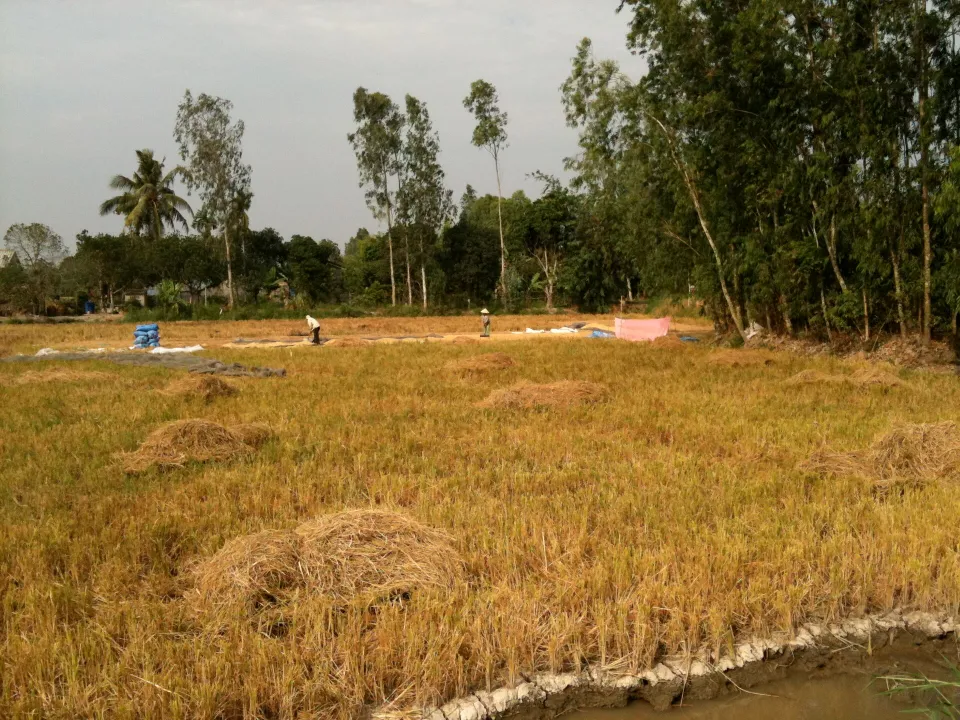
 Photo: Neil Palmer (CIAT), CC BY-SA 2.0
The 6,000 mAh battery covers about two days of scanning. Charge it from any USB-C charger, a motorbike or vehicle socket, or a small solar panel while you walk the rows.
These are design targets for the FS-1 prototype. Figures will change as field testing progresses.
Concept renders of the FS-1. Drag, swipe or use the arrow keys.

Pilot units go to partners who can run structured field trials and share feedback.